

肾上腺素的作用是什么?
Adrenaline (epinephrine) is a powerful chemical messenger that acts primarily as a hormone released into the bloodstream by the adrenal glands. Although it shares structural similarities with neurotransmitters and may act in that role in rare cases, its central nervous system activity is largely mediated by norepinephrine.
Produced and released by the adrenal glands, especially the adrenal medulla, in response to sympathetic nervous system activity, adrenaline’s primary biological function is to prepare the body for “fight or flight”.
This involves increasing heart rate, blood pressure, respiration, and releasing energy reserves to muscles. These widespread effects are sustained as it circulates through the bloodstream.
Adrenaline: Hormone vs. Neurotransmitter
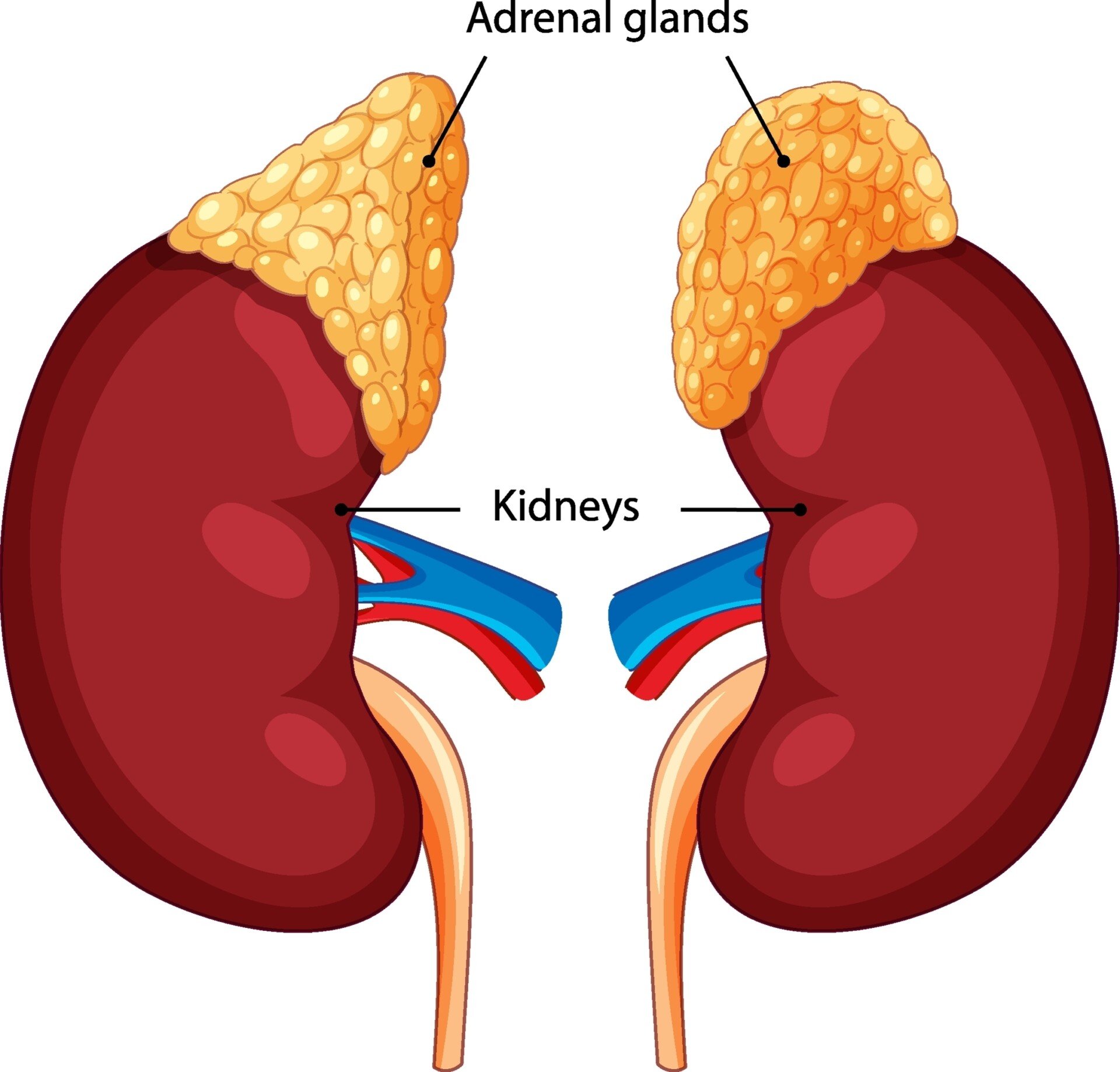
When acting as a hormone, adrenaline is primarily produced by the adrenal glands, located atop the kidneys.
It is then secreted directly into the bloodstream, allowing it to travel throughout the entire body and produce widespread effects.
Hormonal responses are generally slower, often taking minutes to influence target cells, but their effects tend to be longer-lasting.
As a neurotransmitter, adrenaline (or its closely related form, norepinephrine) is released by specific neurons in the brain and spinal cord.
The key distinction lies in its mode of transmission: neurotransmitters are released into tiny gaps between neurons called synapses. This localized release allows for rapid, almost instantaneous, communication, typically within milliseconds.
Adrenaline vs noradrenaline
- Adrenaline (Epinephrine): Released by adrenal glands into the bloodstream, it primarily triggers widespread physical responses like increased heart rate, blood pressure, and energy supply to muscles.
- Noradrenaline (Norepinephrine): Primarily functions as a neurotransmitter released at synapses by specific neurons in the brain and spinal cord. It’s more involved in cognitive/mental alertness and arousal.
Adrenaline’s role as a hormone
Below describes adrenaline’s role as a hormone in the body:
Release and Circulation
As a hormone, adrenaline is primarily produced and secreted by the adrenal glands, which are located on top of the kidneys.
Unlike neurotransmitters that act locally at synapses, hormones like adrenaline are released directly into the bloodstream. This allows it to travel throughout the entire body to reach its target cells and organs.
Role in “Fight-or-Flight” Response
Adrenaline’s main function as a hormone is to prepare the body for the “fight-or-flight” response during stressful or emergency situations. This involves a cascade of widespread physiological changes including:
- Increased heart rate and blood pressure.
- Dilated pupils.
- Increased respiration and sweating.
- Release of energy reserves (like glucose from the liver) to muscles.
- Reduction of non-vital functions, such as gastrointestinal activity and urinary requirements.
These effects are slower to take hold compared to neurotransmitter actions, but they are more widespread and tend to be longer-lasting, helping to sustain the body’s readiness for action after the initial neural response.

Adrenaline’s Role in the Brain
While adrenaline (epinephrine) and noradrenaline (norepinephrine) are chemically similar, it is norepinephrine that primarily functions as a neurotransmitter in the brain.
Adrenaline’s activity within the brain is limited, as it does not readily cross the blood-brain barrier.
Most of the central effects commonly attributed to “adrenaline” are actually mediated by norepinephrine, which plays a key role in the brain’s response to stress and arousal.
Increases Alertness and Arousal
Norepinephrine enhances physiological arousal by increasing heart rate, blood pressure, and alertness.
It is released from neurons originating in the locus coeruleus, a brainstem region that plays a central role in maintaining wakefulness, attention, and vigilance.
This noradrenergic activity prepares the body and brain for quick responses to potential threats.
Sharpens Attention and Reaction Time
Activation of the sympathetic nervous system boosts norepinephrine levels, which heightens sensory processing and enhances access to energy reserves.
This facilitates quicker reaction times and sharper attention—both essential during stressful or emergency situations.
Involved in Emotion Regulation (Fear and Anxiety)
The amygdala, a key structure in the brain’s limbic system, is involved in processing fear and emotional salience. It interacts closely with noradrenergic pathways from the locus coeruleus.
Abnormal increases in norepinephrine activity are associated with heightened emotional reactivity and may contribute to panic attacks and anxiety disorders.
Certain medications that target this system can either provoke or reduce panic symptoms.
Helps Form Vivid Memories during Emotional Events
Emotionally intense experiences activate both the amygdala and stress hormone systems, including the release of norepinephrine and peripheral adrenaline.
These signals enhance the encoding of emotionally significant memories.
Although adrenaline itself doesn’t enter the brain, it influences memory indirectly by stimulating vagal nerve pathways and promoting norepinephrine release in the amygdala.
This interaction helps explain “flashbulb memories”—vivid, detailed recollections of emotionally charged events.

ReviewerAuthor
BSc (Hons) Psychology, MRes, PhD, University of Manchester
Editor-in-Chief for Simply Psychology
Saul McLeod, PhD., is a qualified psychology teacher with over 18 years of experience in further and higher education. He has been published in peer-reviewed journals, including the Journal of Clinical Psychology.
肾上腺素的作用是什么?
肾上腺素(肾上腺素)是一种强大的化学信使,主要作为肾上腺释放到血液中的激素。尽管它与神经递质具有结构相似性,并且在极少数情况下可能发挥这种作用,但其中枢神经系统活动主要由去甲肾上腺素介导。
肾上腺素由肾上腺,尤其是肾上腺髓质,响应交感神经系统活动而产生和释放,其主要生物功能是让身体做好“战斗或逃跑”的准备。
这包括增加心率、血压、呼吸以及向肌肉释放能量储备。当它通过血液循环时,这些广泛的影响会持续下去。
肾上腺素:激素与神经递质
当作为激素时,肾上腺素主要由位于肾脏顶部的肾上腺产生。
然后它直接分泌到血液中,使其遍及整个身体并产生广泛的影响。
激素反应通常较慢,通常需要几分钟才能影响靶细胞,但其效果往往更持久。
作为一种神经递质,肾上腺素(或其密切相关的形式去甲肾上腺素)由大脑和脊髓中的特定神经元释放。
关键的区别在于其传递方式:神经递质被释放到神经元之间称为突触的微小间隙中。这种本地化发布允许快速、几乎即时的通信,通常在几毫秒内。
肾上腺素与去甲肾上腺素
- 肾上腺素(肾上腺素):由肾上腺释放到血液中,它主要引发广泛的身体反应,例如心率增加、血压增加和肌肉能量供应增加。
- 去甲肾上腺素(去甲肾上腺素) :主要作为大脑和脊髓中特定神经元在突触释放的神经递质。它更多地涉及认知/心理警觉性和唤醒。
肾上腺素作为激素的作用
下面描述了肾上腺素作为体内激素的作用:
发行与流通
作为一种激素,肾上腺素主要由位于肾脏顶部的肾上腺产生和分泌。
与在突触局部起作用的神经递质不同,肾上腺素等激素直接释放到血液中。这使得它能够穿越整个身体到达目标细胞和器官。
在“战斗或逃跑”反应中的作用
肾上腺素作为激素的主要功能是让身体在压力或紧急情况下为“战斗或逃跑”反应做好准备。这涉及一系列广泛的生理变化,包括:
- 心率和血压增加。
- 瞳孔放大。
- 呼吸和出汗增加。
- 将能量储备(如肝脏中的葡萄糖)释放到肌肉。
- 非生命功能减少,例如胃肠活动和泌尿需求。
与神经递质的作用相比,这些作用的发生速度较慢,但它们更广泛且往往更持久,有助于维持身体在最初的神经反应后采取行动的准备状态。
肾上腺素在大脑中的作用
虽然肾上腺素(肾上腺素)和去甲肾上腺素(去甲肾上腺素)在化学上相似,但去甲肾上腺素主要在大脑中充当神经递质。
肾上腺素在大脑内的活动是有限的,因为它不容易穿过血脑屏障。
大多数通常归因于“肾上腺素”的中枢作用实际上是由去甲肾上腺素介导的,去甲肾上腺素在大脑对压力和唤醒的反应中起着关键作用。
提高警觉性和唤醒度
去甲肾上腺素通过提高心率、血压和警觉性来增强生理唤醒。
它是由源自蓝斑的神经元释放的,蓝斑是一个脑干区域,在维持清醒、注意力和警觉方面发挥着核心作用。
这种去甲肾上腺素能活动使身体和大脑为快速应对潜在威胁做好准备。
提高注意力和反应时间
交感神经系统的激活会提高去甲肾上腺素水平,从而增强感觉处理并增强能量储备的获取。
这有助于更快的反应时间和更敏锐的注意力——这在压力或紧急情况下都是至关重要的。
参与情绪调节(恐惧和焦虑)
杏仁核是大脑边缘系统的关键结构,参与处理恐惧和情绪突出。它与蓝斑的去甲肾上腺素能通路密切相互作用。
去甲肾上腺素活性的异常增加与情绪反应性增强有关,并可能导致惊恐发作 和焦虑症。
针对该系统的某些药物可以引发或减轻恐慌症状。
有助于在情绪事件中形成生动的记忆
情绪紧张的经历会激活杏仁核和应激激素系统,包括去甲肾上腺素和外周肾上腺素的释放。
这些信号增强了具有情感意义的记忆的编码。
尽管肾上腺素本身不进入大脑,但它通过刺激迷走神经通路和促进杏仁核中去甲肾上腺素的释放来间接影响记忆。
这种互动有助于解释“闪光灯记忆” ——对充满情感的事件的生动、详细的回忆。
审稿人作者
曼彻斯特大学心理学学士(荣誉)、研究硕士、博士
《简单心理学》主编
Saul McLeod 博士是一位合格的心理学教师,在继续教育和高等教育方面拥有超过 18 年的经验。他曾在同行评审期刊上发表文章,包括《临床心理学杂志》。