

副交感神经系统(PSNS)的功能和划分
The parasympathetic nervous system (PSNS) is one of two main divisions of the autonomic nervous system, which controls involuntary body functions like heartbeat, digestion, and breathing.
Known as the “rest and digest” system, the PNS slows down bodily activity after stress, helping your body return to a calm, balanced state. It works in opposition to the sympathetic nervous system (SNS), which is responsible for the “fight or flight” response.

How the Parasympathetic Nervous System Works
The PNS operates automatically, without conscious effort. It sends signals from the brain and lower spinal cord to major organs to slow things down, promote digestion, and encourage recovery.
Key components of the PNS include:
- Cranial nerves, especially the vagus nerve, which makes up about 75% of the parasympathetic system and reaches organs like the stomach, bladder, and heart.
- Spinal nerves from the sacral region (S2-S4) that support bladder and reproductive functions.
- Neurotransmitter: The PNS primarily uses acetylcholine, a chemical messenger that slows heart rate, stimulates digestion, and promotes glandular secretions.
Key functions of the parasympathetic nervous system
The parasympathetic nervous system helps regulate many everyday functions that keep your body healthy and balanced.
Key functions of the PSNS include:
- Slowing heart rate and breathing to resting levels
- Constricting pupils to reduce light intake in relaxed conditions
- Stimulating digestion through increased salivation and intestinal movement
- Promoting urination by contracting the bladder
- Facilitating bowel movements via intestinal contractions
- Producing tears to lubricate and protect eye tissue
- Releasing bile to help digest fats
Imagine you've just finished giving an important presentation at work. As you sit back down at your desk, you notice your racing heart begins to slow, your tense muscles start to relax, and your churning stomach settles enough that you're actually feeling hungry.

These calming sensations are your parasympathetic nervous system at work, helping your body return to its normal, relaxed state after the stressful event has passed.

Why the parasympathetic nervous system is important
Chronic stress keeps the sympathetic system in overdrive, which can lead to high blood pressure, digestive issues, sleep problems, and anxiety.
The parasympathetic system helps counterbalance this stress, protecting both physical and mental health.
For example, after a tense meeting or a near accident, the PNS kicks in to slow your heartbeat, relax your muscles, and bring your body back to baseline.
Over time, a well-functioning PNS helps:
- Improve digestion
- Lower stress levels
- Support cardiovascular health
- Promote restorative sleep
Parasympathetic vs. sympathetic nervous system
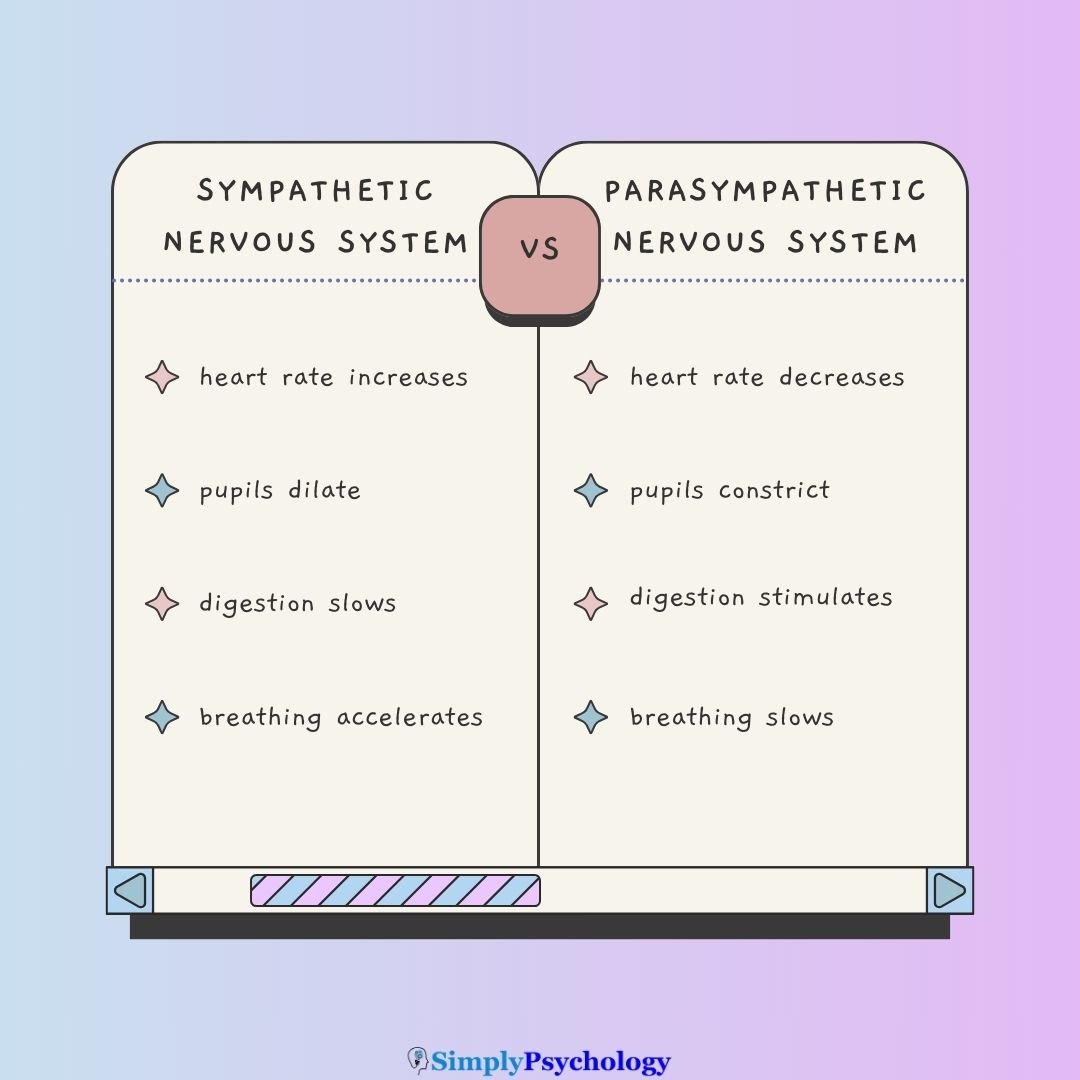
Think of the parasympathetic and sympathetic systems as a brake and gas pedal.
The sympathetic nervous system gets you ready for action (increased heart rate, energy mobilization), while the parasympathetic system helps you slow down and recover.
| Function | Sympathetic (Fight or Flight) | Parasympathetic (Rest and Digest) |
|---|---|---|
| Heart rate | Increases | Decreases |
| Pupils | Dilate | Constrict |
| Digestion | Slows | Stimulates |
| Breathing | Accelerates | Slows |
| Salivation | Inhibits | Stimulates |
| Bladder | Relaxes | Contracts |
Signs of Parasympathetic Dysfunction
When the parasympathetic system isn’t working properly, your body may struggle to calm down or recover after stress. Common symptoms include:
- Persistent high heart rate or blood pressure
- Digestive problems (e.g., constipation or diarrhea)
- Poor bladder control
- Dry mouth or eyes
- Light sensitivity due to pupil dysfunction
- Feeling “stuck” in a stressed or anxious state
Causes of dysfunction may include diabetes, aging, neurological conditions like Parkinson’s disease, or nerve injury.
What Happens When It’s Overactive?
An overactive parasympathetic system, although less common, can also cause problems. Excess acetylcholine in the body may lead to:
- Muscle cramps or weakness
- Blurred vision or excessive tearing
- Excessive saliva or digestive activity
- Diarrhea or low blood pressure
In rare cases, severe overactivation may cause fainting or paralysis.
Activating Your Parasympathetic Nervous System
Fortunately, there are simple techniques that can activate your PNS and help your body relax and recover:
- Deep breathing: Long, slow exhales (e.g., box breathing: inhale 4, hold 4, exhale 4, hold 4)
- Mind-body practices: Yoga, tai chi, or gentle stretching
- Meditation and mindfulness: Encourage calm awareness and reduce SNS activity
- Progressive muscle relaxation: Tense and relax muscle groups to trigger calm
- Cold exposure: Brief exposure to cold water can stimulate the vagus nerve
These activities signal safety to your nervous system and help bring your body back into balance.
Sources
Britannica, T. Editors of Encyclopaedia (2019, September 6). Parasympathetic nervous system. Encyclopedia Britannica. https://www.britannica.com/science/parasympathetic-nervous-system
Lumen. (n.d.). Functions of the Autonomic Nervous System. Retrieved May 5, 2021 from https://courses.lumenlearning.com/boundless-ap/chapter/functions-of-the-autonomic-nervous-system/
Nall, R. (2020, April 23). Your Parasympathetic Nervous System Explained. Healthline. https://www.healthline.com/health/parasympathetic-nervous-system
Tindle, J., & Tadi, P. (2020). Neuroanatomy, Parasympathetic Nervous System. StatPearls [Internet].ReviewerAuthor
BSc (Hons) Psychology, MRes, PhD, University of Manchester
Editor-in-Chief for Simply Psychology
副交感神经系统 (PSNS) 功能和划分
副交感神经系统(PSNS) 是自主神经系统的两个主要部分之一,控制着心跳、消化和呼吸等不自主的身体功能。
PNS被称为“休息和消化”系统,它会在压力后减慢身体活动,帮助您的身体恢复平静、平衡的状态。它与负责“战斗或逃跑”反应的交感神经系统(SNS )相反。
副交感神经系统如何工作
PNS 会自动运行,无需有意识的努力。它将信号从大脑和下脊髓发送到主要器官,以减慢速度、促进消化并促进恢复。
PNS 的关键组件包括:
- 脑神经,尤其是迷走神经,约占副交感系统的 75%,到达胃、膀胱和心脏等器官。
- 来自骶区 (S2-S4) 的脊髓神经支持膀胱和生殖功能。
- 神经递质:三七总皂甙主要使用乙酰胆碱,这是一种化学信使,可以减慢心率、刺激消化和促进腺体分泌。
副交感神经系统的关键功能
副交感神经系统有助于调节许多日常功能,保持身体健康和平衡。
PSNS 的主要功能包括:
- 减慢心率和呼吸至静息水平
- 在放松的条件下收缩瞳孔以减少光摄入
- 通过增加唾液分泌和肠道运动刺激消化
- 通过收缩膀胱促进排尿
- 通过肠道收缩促进排便
- 产生眼泪来润滑和保护眼组织
- 释放胆汁帮助消化脂肪
想象一下,您刚刚在工作中完成了一次重要的演示。当你坐回办公桌前时,你会发现自己剧烈的心跳开始减慢,紧张的肌肉开始放松,翻腾的胃也平静下来,你实际上感到饥饿了。

这些平静的感觉是你的副交感神经系统在工作,帮助你的身体在压力事件过去后恢复到正常、放松的状态。
为什么副交感神经系统很重要
慢性压力会使交感系统过度运转,从而导致高血压、消化问题、睡眠问题和焦虑。
副交感系统有助于平衡这种压力,保护身心健康。
例如,在一次紧张的会议或险些发生事故后,三七总皂甙就会启动,减慢您的心跳,放松您的肌肉,并使您的身体恢复到基线状态。
随着时间的推移,运转良好的 PNS 有助于:
- 改善消化
- 降低压力水平
- 支持心血管健康
- 促进恢复性睡眠
副交感神经系统与交感神经系统
将副交感神经和交感神经系统视为刹车和油门踏板。
交感神经系统让您做好行动准备(心率加快、能量调动),而副交感系统则帮助您放慢速度并恢复。
| 功能 | 富有同情心(战斗或逃跑) | 副交感神经(休息和消化) |
|---|---|---|
| 心率 | 增加 | 减少 |
| 学生 | 扩张 | 收缩 |
| 消化 | 减慢速度 | 刺激 |
| 呼吸 | 加速 | 减慢速度 |
| 流涎 | 抑制 | 刺激 |
| 膀胱 | 放松 | 合约 |
副交感神经功能障碍的迹象
当副交感系统无法正常工作时,您的身体可能难以在压力后平静下来或恢复。常见症状包括:
- 持续的高心率或血压
- 消化问题(例如便秘或腹泻)
- 膀胱控制不良
- 口干或眼睛干燥
- 瞳孔功能障碍导致的光敏感性
- 感觉“陷入”压力或焦虑状态
功能障碍的原因可能包括糖尿病、衰老、帕金森病等神经系统疾病或神经损伤。
当它过度活跃时会发生什么?
副交感系统过度活跃虽然不太常见,但也会引起问题。体内过量的乙酰胆碱可能会导致:
- 肌肉痉挛或无力
- 视力模糊或过度流泪
- 唾液过多或消化活动过多
- 腹泻或低血压
在极少数情况下,严重的过度激活可能会导致昏厥或瘫痪。
激活你的副交感神经系统
幸运的是,有一些简单的技巧可以激活 PNS 并帮助您的身体放松和恢复:
- 深呼吸:长而缓慢的呼气(例如箱式呼吸:吸气 4 次,保持 4 次,呼气 4 次,保持 4 次)
- 身心练习:瑜伽、太极拳或轻柔的伸展运动
- 冥想和正念:鼓励冷静意识并减少 SNS 活动
- 渐进式肌肉放松:紧张和放松肌肉群以引发平静
- 冷接触:短暂接触冷水会刺激迷走神经
这些活动向您的神经系统发出安全信号,并帮助您的身体恢复平衡。
来源
大英百科全书 T. 百科全书编辑(2019 年 9 月 6 日)。副交感神经系统。大英百科全书。 https://www.britannica.com/science/parasympathetic-nervous-system
流明。 (nd)。自主神经系统的功能。 2021 年 5 月 5 日检索自 https://courses.lumenlearning.com/boundless-ap/chapter/functions-of-the-autonomic-nervous-system/
纳尔,R.(2020 年,4 月 23 日)。您的副交感神经系统的解释。健康热线。 https://www.healthline.com/health/parasympathetic-nervous-system
Tindle, J. 和 Tadi, P. (2020)。神经解剖学,副交感神经系统。StatPearls [互联网]。审稿人作者
曼彻斯特大学心理学学士(荣誉)、研究硕士、博士
《简单心理学》主编