

自主神经系统 (ANS):它是什么及其工作原理
The autonomic nervous system (ANS) is part of the peripheral nervous system (PNS) responsible for regulating involuntary bodily functions, such as heart rate, digestion, respiratory rate, and pupillary response.
It consists of two main divisions: the sympathetic and parasympathetic systems, which often work in opposition to maintaining the body’s internal balance or homeostasis. It plays a key role in the fight-or-flight response.

Key Takeaways
- The autonomic nervous system (ANS) controls involuntary body functions like heart rate, breathing, digestion, and pupil response.
- It is divided into three branches: the sympathetic (fight-or-flight), parasympathetic (rest-and-digest), and enteric (gut-based) systems.
- The ANS maintains homeostasis by balancing responses to stress and recovery through its different branches.
- Emotional states like anxiety and trauma can dysregulate the ANS, sometimes leading to chronic health or psychological issues.
- ANS dysfunction can occur due to aging, disease, or injury, with symptoms ranging from fainting and abnormal heart rate to digestive problems.
The autonomic nervous system differs from the somatic nervous system (another branch of the peripheral nervous system), which is associated with controlling voluntary body movements.
Although most of the functions of the ANS are automatic, they can, however, work in conjunction with the somatic nervous system.
Functions of the ANS
The ANS is important for regulating the body, and is essential for maintaining homeostasis. This means balancing the body’s conditions and functions necessary for living.
Below is a list of some of the functions of the ANS:
- Regulating blood pressure
- Regulating heart rate
- Secretion of bodily fluids such as saliva, sweat, and urine
- Breathing
- Regulating body temperature
- Pupillary responses
- Regulating metabolism
After eating lunch, Jamal feels drowsy and relaxed. His heart rate slows slightly, and his digestive system activates to process food. This is his parasympathetic system in action, prioritizing digestion and energy storage.
Research shows the ANS responds to emotional states like fear and happiness. Activation of the ANS was found when people responded to positive and negative emotions (Shiota et al., 2011).

Neurotransmitters of the autonomic nervous system
The ANS works by receiving information from either external stimuli or the body.
The hypothalamus, which is right above the brain stem, receives autonomic regulatory input from the limbic system (a group of structures deep in the brain that is associated with functions such as memory, emotion, and fear). The hypothalamus controls ANS activity using signals from the limbic system.
There are also three critical neurotransmitters involved in successful communication within the ANS:
- Acetylcholine – is primarily found within the parasympathetic nervous system, which has an inhibiting effect.
- Epinephrine – also known as adrenaline, is primarily found within the sympathetic nervous system, which has a stimulating effect.
- Norepinephrine – also known as noradrenaline, is primarily found within the sympathetic nervous system and has a stimulating effect.
Divisions of the autonomic Nervous system
There are three branches to the ANS; the sympathetic nervous system, the parasympathetic nervous system, and the enteric nervous system:
Sympathetic Nervous System
The sympathetic nervous system is involved in responses that help us deal with stress. It slows bodily processes that are less important in emergencies, such as digestion.
For instance, if the temperature of a room is too hot, the sympathetic system will encourage the body to sweat in response to this change.

The most noticeable function of the sympathetic branch is during the fight-or-flight response.
The sympathetic system activates and releases epinephrine (adrenaline) during threatening or stressful conditions, providing an automatic response.
Sarah walks home alone at night. She hears footsteps behind her. Her heart races, pupils dilate, and she starts to sweat. This is her sympathetic nervous system preparing her to react—either to flee or defend herself.
The purpose of stimulating these bodily responses is to prepare the individual to either escape or fight in dangerous situations.
Although the sympathetic nervous system was evolutionarily used in life-threatening situations, modern-day life, such as work stressors and relationship problems, can also trigger this response.
Similarly, those with anxiety disorders and phobias experience high quantities of epinephrine, resulting in them experiencing the same autonomic responses as in life-threatening situations.
Parasympathetic Nervous System
The parasympathetic nervous system relaxes the individual once the stress has passed (e.g., slows the heart rate down and reduces blood pressure) and conserves the body’s natural activity by decreasing activity/maintaining it.
Later, Sarah gets home and locks the door. She exhales, her heart rate slows, and her muscles relax. Her parasympathetic system takes over, helping her body return to a resting state.
The pupils will constrict, the heart rate will return to a resting rhythm, and sweating will be reduced or stopped. The parasympathetic system is therefore important for ensuring we return to normal after a stressful situation.
Without this system, the body will be constantly alert, draining all energy, and this can lead to chronic stress. This shows how important the parasympathetic is in maintaining homeostasis (a balance in the body).

Sympathetic vs. Parasympathetic Nervous System
| Organ/System | Sympathetic Nervous System (“Fight or Flight”) | Parasympathetic Nervous System (“Rest and Digest”) |
|---|---|---|
| Heart | Increases heart rate | Decreases heart rate |
| Lungs | Dilates bronchi (more air in) | Constricts bronchi (returns to normal) |
| Pupils | Dilates pupils (better vision in danger) | Constricts pupils (normal vision) |
| Digestive System | Slows digestion | Stimulates digestion |
| Bladder | Relaxes bladder (inhibits urination) | Contracts bladder (promotes urination) |
| Salivary Glands | Inhibits saliva production | Stimulates saliva production |
| Sweat Glands | Activates sweating | No significant effect |
| Liver | Stimulates glucose release | Promotes glucose storage |
| Adrenal Glands | Stimulates adrenaline release | No direct stimulation |
| Reproductive Organs | Decreases function | Stimulates arousal |
Enteric Nervous System
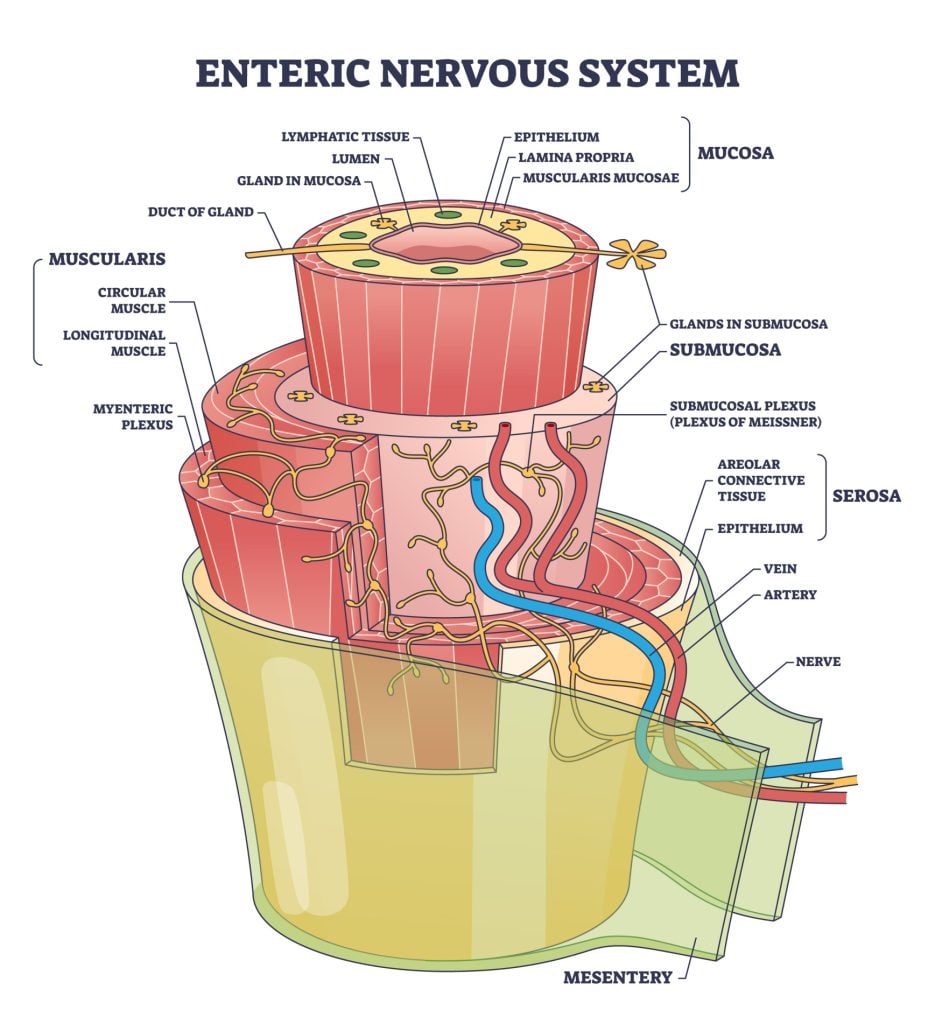
The enteric nervous system (ENS) is a branch of the ANS that operates independently of the central nervous system. This system consists of neurons confined to the gastrointestinal tract (also known as the gut).
The enteric nervous system can function independently, although it interacts with both the sympathetic and parasympathetic systems.
The neurons that comprise the enteric system are responsible for controlling the motor functions of the system as well as secreting enzymes within the gastrointestinal tract.
The neurons within this system communicate through many neurotransmitters, such as dopamine, serotonin, and acetylcholine. The circuits of neurons within this system are also able to control local blood flow and modulate immune functions.
Autonomic Dysfunction
Signs of dysfunction associated with the autonomic nervous system include:
If someone believes they may have an issue with their ANS, they could be displaying one or more of the following symptoms:
- Lack of pupillary response
- Abnormally high or low blood pressure
- Severe anxiety or depression
- Digestive issues
- Breathing
- Lack of sweating or too much sweating
- Tachycardia (abnormally fast heart rate)
- Incontinence issues
- Feeling achy, or experiencing pains
- Light-headedness
- Feeling faint or actually fainting
The ANS and Emotional Stress
Chronic stress, anxiety, and trauma can disrupt normal autonomic regulation by overactivating the sympathetic nervous system.
This keeps the body in a prolonged “fight or flight” state—raising heart rate, increasing cortisol, and impairing digestion and sleep. Over time, this imbalance can lead to exhaustion and health issues.
Polyvagal theory, proposed by Stephen Porges, suggests the vagus nerve plays a central role in emotional regulation, safety perception, and social behavior.
It explains how traumatic experiences can trigger immobilization or dissociation by activating a primitive “shutdown” response—highlighting the ANS’s role in both physiological and psychological well-being.
ANS Development and Aging
The autonomic nervous system develops gradually after birth and becomes more stable into later childhood and into adulthood.
However, with aging, the ANS may become less responsive. Older adults often show reduced heart rate variability, slower pupillary responses, and impaired thermoregulation, making them more vulnerable to fainting, temperature extremes, and stress-related health issues.
These changes reflect a natural decline in autonomic flexibility, which can also affect resilience to illness and recovery.
Autonomic Neuropathy/ Disorders Caused by ANS Dysfunction
Autonomic neuropathy refers to the damage of autonomic nerves. These are disorders that can affect the sympathetic nerves, parasympathetic nerves, or both.
The features of autonomic neuropathy include having a fixed heart rate, constipation, abnormal sweating, decreased pupil size, and absent or delayed light reflexes (Bankenahally & Krovvidi, 2016).
There are a number of other disorders which can be the result of ANS dysfunction:
- Acute autonomic paralysis – associated with spinal cord injury, resulting in acute and uncontrolled hypertension.
- Multiple system atrophy – a rare condition that causes gradual damage to the nerve cells. Pure autonomic failure – dysfunction of many processes controlled by the ANS.
- Familial dysautonomia – also known as Riley-Day syndrome. This is an inherited condition where the nerve fibers do not function properly, so these individuals have trouble feeling pain, temperature, pressure, and positioning their arms and legs.
Taking Care of the Autonomic Nervous System
While many autonomic processes happen automatically, lifestyle choices can influence how well the system functions.
Managing stress is key—chronic stress can overactivate the sympathetic system and disrupt balance. Practices like deep breathing, mindfulness meditation, and yoga help activate the parasympathetic system and promote calm.
Regular physical activity improves heart rate variability and supports overall autonomic tone.
Good sleep hygiene, staying hydrated, and eating a balanced diet rich in fiber and nutrients also support gut health and the enteric nervous system.
Reducing stimulants like caffeine and alcohol may help people who experience sensitivity or dysregulation.
In some cases, people benefit from biofeedback, vagal nerve stimulation, or working with a therapist to manage anxiety or trauma-related ANS imbalance.
Taking care of the autonomic nervous system means maintaining habits that support physical and emotional resilience.
FAQS
Which division of the autonomic nervous system returns the body to a relaxed condition after an emergency?
The parasympathetic division of the autonomic nervous system is responsible for returning the body to a relaxed and restorative state after an emergency or stress.
It counteracts the effects of the sympathetic division, which initiates the “fight or flight” response during emergencies. The parasympathetic system promotes “rest and digest” functions, restoring balance and conserving energy.
Which division of the ans can function independently without being stimulated by the central nervous system?
The enteric division of the autonomic nervous system (ANS) can function independently without being stimulated by the central nervous system. It primarily manages the functions of the gastrointestinal tract, including digestion and motility, and can operate autonomously but also communicates with the central nervous system.
Which division of the autonomic nervous system prepares the body for action in a stressful situation?
The sympathetic division of the autonomic nervous system prepares the body for action in stressful situations, often referred to as the “fight or flight” response. It increases heart rate, dilates airways, and redirects blood flow to muscles, among other responses, to ready the body for immediate action.
自主神经系统 (ANS):它是什么及其工作原理
自主神经系统 (ANS) 是周围神经系统(PNS) 的一部分,负责调节不自主的身体功能,例如心率、消化、呼吸频率和瞳孔反应。
它由两个主要部分组成:交感神经系统和副交感神经系统,它们通常与维持身体的内部平衡或体内平衡相反。它在战斗或逃跑反应中发挥着关键作用。
要点
- 自主神经系统 (ANS) 控制心率、呼吸、消化和瞳孔反应等非自主身体功能。
- 它分为三个分支:交感神经(战斗或逃跑)、副交感神经(休息和消化)和肠(基于肠道)系统。
- ANS 通过其不同分支平衡对压力的反应和恢复来维持体内平衡。
- 焦虑和创伤等情绪状态可能会导致自主神经系统失调,有时会导致慢性健康或心理问题。
- ANS 功能障碍可能因衰老、疾病或受伤而发生,症状包括昏厥、心率异常和消化问题等。
自主神经系统不同于躯体神经系统(周围神经系统的另一个分支),后者与控制自主身体运动有关。
尽管 ANS 的大部分功能都是自动的,但它们可以与躯体神经系统协同工作。
ANS 的功能
ANS 对于调节身体很重要,对于维持体内平衡至关重要。这意味着平衡身体的状况和生活所需的功能。
以下是 ANS 的一些功能列表:
- 调节血压
- 调节心率
- 体液的分泌,如唾液、汗液和尿液
- 呼吸
- 调节体温
- 瞳孔反应
- 调节新陈代谢
吃完午餐后,贾马尔感到昏昏欲睡、放松。他的心率稍微减慢,他的消化系统启动处理食物。这是他的副交感系统在起作用,优先考虑消化和能量储存。
研究表明,ANS 会对恐惧和快乐等情绪状态做出反应。当人们对积极和消极情绪做出反应时,ANS 就会被激活(Shiota et al., 2011)。
自主神经系统的神经递质
ANS 的工作原理是接收来自外部刺激或身体的信息。
下丘脑位于脑干正上方,接收来自边缘系统(大脑深处的一组结构,与记忆、情绪和恐惧等功能相关)的自主调节输入。下丘脑使用来自边缘系统的信号控制 ANS 活动。
ANS 内还涉及三种关键的神经递质:
- 乙酰胆碱——主要存在于副交感神经系统中,具有抑制作用。
- 肾上腺素– 也称为肾上腺素,主要存在于交感神经系统中,具有刺激作用。
- 去甲肾上腺素– 也称为去甲肾上腺素,主要存在于交感神经系统中,具有刺激作用。
自主神经系统的划分
ANS 共有三个分支:交感神经系统、副交感神经系统和肠神经系统:
交感神经系统
交感神经系统参与帮助我们应对压力的反应。它会减慢在紧急情况下不太重要的身体过程,例如消化。
例如,如果房间的温度太热,交感神经系统会促使身体出汗以应对这种变化。
交感神经分支最显着的功能是在战斗或逃跑反应期间。
在受到威胁或有压力的情况下,交感神经系统会激活并释放肾上腺素(肾上腺素),从而提供自动反应。
晚上,莎拉独自走回家。她听到身后有脚步声。她的心跳加速,瞳孔放大,开始出汗。这是她的交感神经系统让她做好反应的准备——要么逃跑,要么自卫。
刺激这些身体反应的目的是让个体做好在危险情况下逃跑或战斗的准备。
尽管交感神经系统在进化过程中被用于危及生命的情况,但现代生活,例如工作压力和人际关系问题,也可能引发这种反应。
同样,患有焦虑症和恐惧症的人会经历大量的肾上腺素,导致他们经历与危及生命的情况相同的自主反应。
副交感神经系统
一旦压力过去,副交感神经系统就会使个体放松(例如,减慢心率并降低血压),并通过减少活动/维持活动来保存身体的自然活动。
后来,莎拉回到家并锁上了门。她呼气,心率减慢,肌肉放松。她的副交感系统接管,帮助她的身体恢复到休息状态。
瞳孔会收缩,心率会恢复到静息节奏,出汗会减少或停止。因此,副交感系统对于确保我们在压力情况后恢复正常非常重要。
如果没有这个系统,身体就会一直保持警惕,耗尽所有能量,这可能会导致慢性压力。这表明副交感神经在维持体内平衡(体内平衡)方面有多重要。
交感神经系统与副交感神经系统
| 器官/系统 | 交感神经系统(“战斗或逃跑”) | 副交感神经系统(“休息和消化”) |
|---|---|---|
| 心 | 增加心率 | 降低心率 |
| 肺 | 扩张支气管(更多空气进入) | 收缩支气管(恢复正常) |
| 学生 | 扩大瞳孔(危险中视力更好) | 收缩瞳孔(正常视力) |
| 消化系统 | 减缓消化 | 促进消化 |
| 膀胱 | 放松膀胱(抑制排尿) | 收缩膀胱(促进排尿) |
| 唾液腺 | 抑制唾液产生 | 刺激唾液分泌 |
| 汗腺 | 激活出汗 | 无明显影响 |
| 肝 | 刺激葡萄糖释放 | 促进葡萄糖储存 |
| 肾上腺 | 刺激肾上腺素释放 | 无直接刺激 |
| 生殖器官 | 功能减退 | 刺激性唤起 |
肠神经系统
肠神经系统 (ENS) 是 ANS 的一个分支,独立于中枢神经系统运行。该系统由局限于胃肠道(也称为肠道)的神经元组成。
肠神经系统可以独立发挥作用,尽管它与交感神经和副交感系统相互作用。
组成肠系统的神经元负责控制系统的运动功能以及在胃肠道内分泌酶。
该系统内的神经元通过许多神经递质进行交流,例如多巴胺、血清素和乙酰胆碱。该系统内的神经元回路还能够控制局部血流并调节免疫功能。
自主神经功能障碍
与自主神经系统相关的功能障碍迹象包括:
如果有人认为自己的 ANS 可能有问题,他们可能会表现出以下一种或多种症状:
- 缺乏瞳孔反应
- 血压异常高或低
- 严重焦虑或抑郁
- 消化问题
- 呼吸
- 出汗不足或出汗过多
- 心动过速(心率异常快)
- 失禁问题
- 感觉疼痛或经历疼痛
- 头晕
- 感觉晕倒或实际上晕倒
ANS 和情绪压力
慢性压力、焦虑和创伤会过度激活交感神经系统,从而扰乱正常的自主调节。
这使身体长期处于“战斗或逃跑”状态——心率加快、皮质醇增加、消化和睡眠受损。随着时间的推移,这种不平衡会导致疲惫和健康问题。
斯蒂芬·波吉斯提出的多迷走神经理论表明,迷走神经在情绪调节、安全感知和社会行为中发挥着核心作用。
它解释了创伤经历如何通过激活原始的“关闭”反应来触发固定或解离——强调了 ANS 在生理和心理健康中的作用。
ANS 发育与老化
自主神经系统在出生后逐渐发育,并在儿童后期和成年期变得更加稳定。
然而,随着年龄的增长,ANS 的反应可能会变得不那么敏感。老年人通常表现出心率变异性降低、瞳孔反应减慢和体温调节受损,使他们更容易晕厥、极端温度和与压力相关的健康问题。
这些变化反映了自主灵活性的自然下降,这也会影响疾病恢复能力和恢复能力。
自主神经病变/ANS 功能障碍引起的疾病
自主神经病变是指自主神经的损伤。这些疾病可能影响交感神经、副交感神经或两者。
自主神经病变的特征包括心率固定、便秘、出汗异常、瞳孔大小减小以及光反射缺失或延迟(Bankenahally & Krovvidi,2016)。
ANS 功能障碍可能导致许多其他疾病:
- 急性自主神经麻痹——与脊髓损伤有关,导致急性且不受控制的高血压。
- 多系统萎缩——一种罕见疾病,会导致神经细胞逐渐受损。纯粹的自主神经故障——ANS 控制的许多过程出现功能障碍。
- 家族性自主神经功能障碍——也称为莱利戴综合征。这是一种遗传性疾病,神经纤维无法正常发挥作用,因此这些人感觉疼痛、温度、压力以及手臂和腿的位置都有困难。
照顾自主神经系统
虽然许多自主过程是自动发生的,但生活方式的选择会影响系统的功能。
管理压力是关键——慢性压力会过度激活交感神经系统并破坏平衡。深呼吸、正念冥想和瑜伽等练习有助于激活副交感系统并促进平静。
定期的体育活动可以改善心率变异性并支持整体自主神经张力。
良好的睡眠卫生、保持水分以及富含纤维和营养素的均衡饮食也支持肠道健康和肠神经系统。
减少咖啡因和酒精等兴奋剂可能有助于敏感或调节失调的人。
在某些情况下,人们可以从生物反馈、迷走神经刺激或与治疗师合作来控制焦虑或创伤相关的 ANS 失衡中受益。
照顾自主神经系统意味着保持支持身体和情绪恢复能力的习惯。
常见问题解答
自主神经系统的哪个部分在紧急情况后使身体恢复到放松状态?
自主神经系统的副交感神经负责在紧急情况或压力后使身体恢复到放松和恢复状态。
它抵消了交感神经分裂的影响,交感神经分裂在紧急情况下会引发“战斗或逃跑”反应。副交感系统促进“休息和消化”功能,恢复平衡并保存能量。
an的哪个部分可以独立发挥作用而不受到中枢神经系统的刺激?
自主神经系统(ANS)的肠部可以独立发挥作用,不受中枢神经系统的刺激。它主要管理胃肠道的功能,包括消化和蠕动,可以自主运作,但也与中枢神经系统沟通。
自主神经系统的哪个部分使身体做好在压力情况下采取行动的准备?
自主神经系统的交感神经系统使身体做好在压力情况下采取行动的准备,通常称为“战斗或逃跑”反应。除其他反应外,它还能提高心率、扩张气道、重新引导血液流向肌肉,让身体做好立即采取行动的准备。
Saul McLeod 博士是一位合格的心理学教师,在继续教育和高等教育方面拥有超过 18 年的经验。他曾在同行评审期刊上发表文章,包括《临床心理学杂志》。
曼彻斯特大学心理学学士(荣誉)、研究硕士、博士
《简单心理学》主编